Championship Outrights: NBA Futures and MVP Markets
 Available in US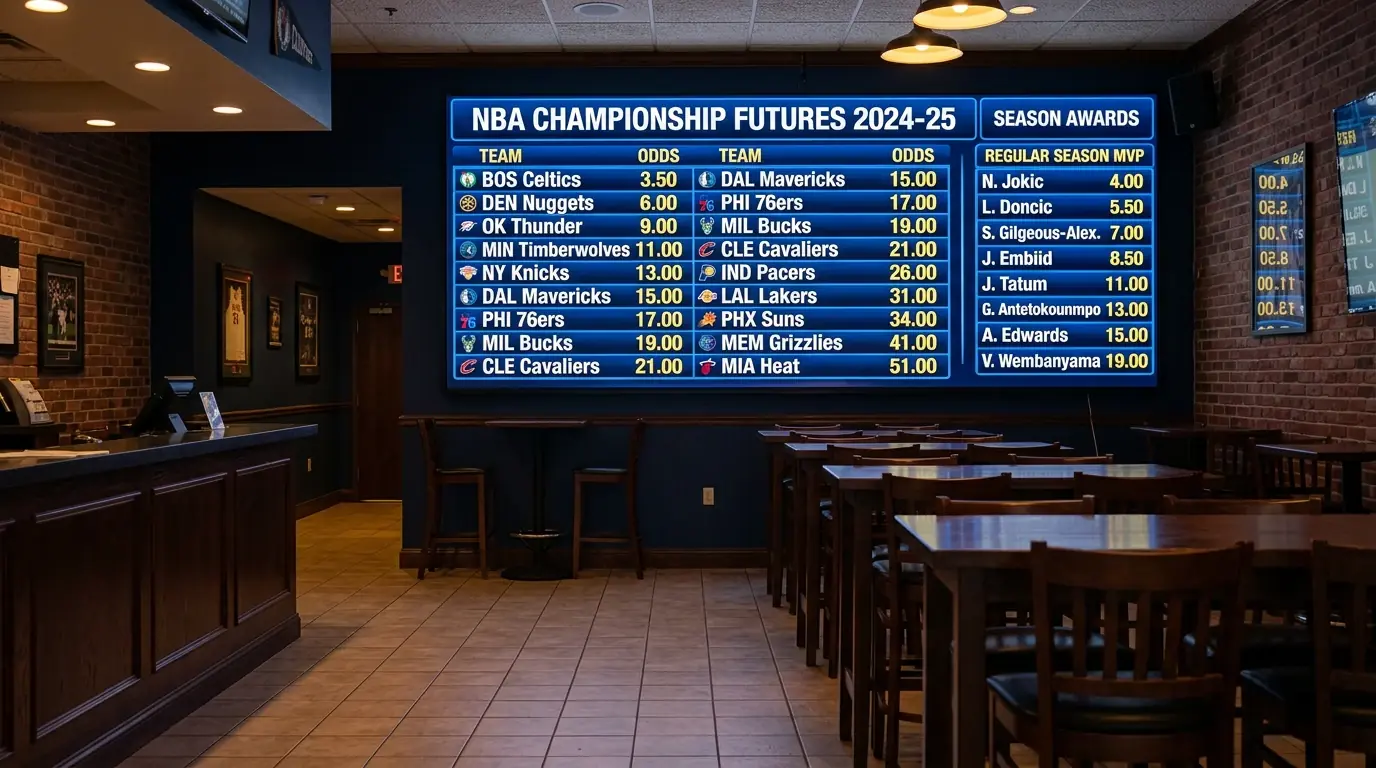
Long-Term Outright Betting and Season Win Totals
I’ve kept a paper notebook of every NBA futures ticket I’ve placed since 2014. The most depressing entry is a 2017 title bet at 25.00 on a contender who tore a ligament in February. The most exhilarating is a season win-totals over from October 2022 that I cashed at the buzzer of game 81. Both teach the same lesson: a futures bet isn’t a wager on a game. It’s a long-term position that has to survive 82 games, hundreds of injury risks, three trade deadlines and your own impulse to hedge or cash out at the wrong moment.
Futures markets ask you to lock up bankroll for months at prices that drift constantly. The 2025-26 NBA season pulled in 170 million viewers across US broadcasts, plus 1.3 billion hours of global live consumption, which means more eyes are on every game than ever – and more reasons for the futures market to react to single-game performances. With more than 130 international players in the league this season – a record – the futures board is also globally distributed in a way it wasn’t a decade ago.
UK punters have full access to NBA futures via UKGC-licensed books. The pricing is competitive, the variety is growing, and the risk profile is unlike any other NBA market.
Title and Conference Futures
The championship odds board is the heart of NBA futures. Every team has a price, from a short-priced favourite at maybe 4.50 in October to a 250.00 longshot for the league’s worst roster. The price reflects the combined probability of winning the title, factoring in regular-season seeding, playoff matchup, injury luck and home-court advantage.
Conference futures – Eastern Conference winner, Western Conference winner – are the smaller siblings. They’re cheaper to enter because the implied probabilities sum to 100% within each conference rather than across the whole league. A team priced at 8.00 to win the Eastern Conference is a sharper bet than a team at 12.00 to win the title, because the conference-only ticket strips out the cross-conference matchup variance.
The trap with title futures is the front-runner premium. The two or three favourites are always priced shorter than their fair probability, because public money piles on every “obvious” champion. The middle of the board – teams in the 15.00 to 30.00 range – is where the best value sits in October, because they can compound through good play and trade-deadline upgrades. The longshots at 100.00+ are entertainment, not edge. The maths simply doesn’t work over a six-month season.
MVP, DPOY and Individual Awards
The MVP race is half basketball, half storytelling. Voters are media members, and they reward narrative as much as raw numbers. A scorer who breaks 30 points per game on a 55-win team gets votes. A defensive anchor on a 60-win team often doesn’t, even if the on-court value is comparable.
That narrative element makes MVP odds more volatile than title odds. A two-week scoring spree in January can move a player from 12.00 to 5.00 – even if the team’s title chances haven’t shifted at all. The flip side is that a five-game injury can move a frontrunner from 2.50 to 9.00. Pricing models trail these moves by a day or two, which is why the savvy futures punter watches the schedule for upcoming back-to-back games and travel-heavy stretches.
Defensive Player of the Year (DPOY), Sixth Man, Most Improved, Rookie of the Year – each has its own pricing logic. DPOY is the most numerically driven: blocks, steals, defensive rating, opponent shooting. Sixth Man is heavily biased toward bench scorers on playoff teams. Most Improved tends to reward third-year guards with sudden usage spikes. The lower-profile awards have wider markets, fewer sharp bettors, and occasionally produce real value if you’re willing to research the field.
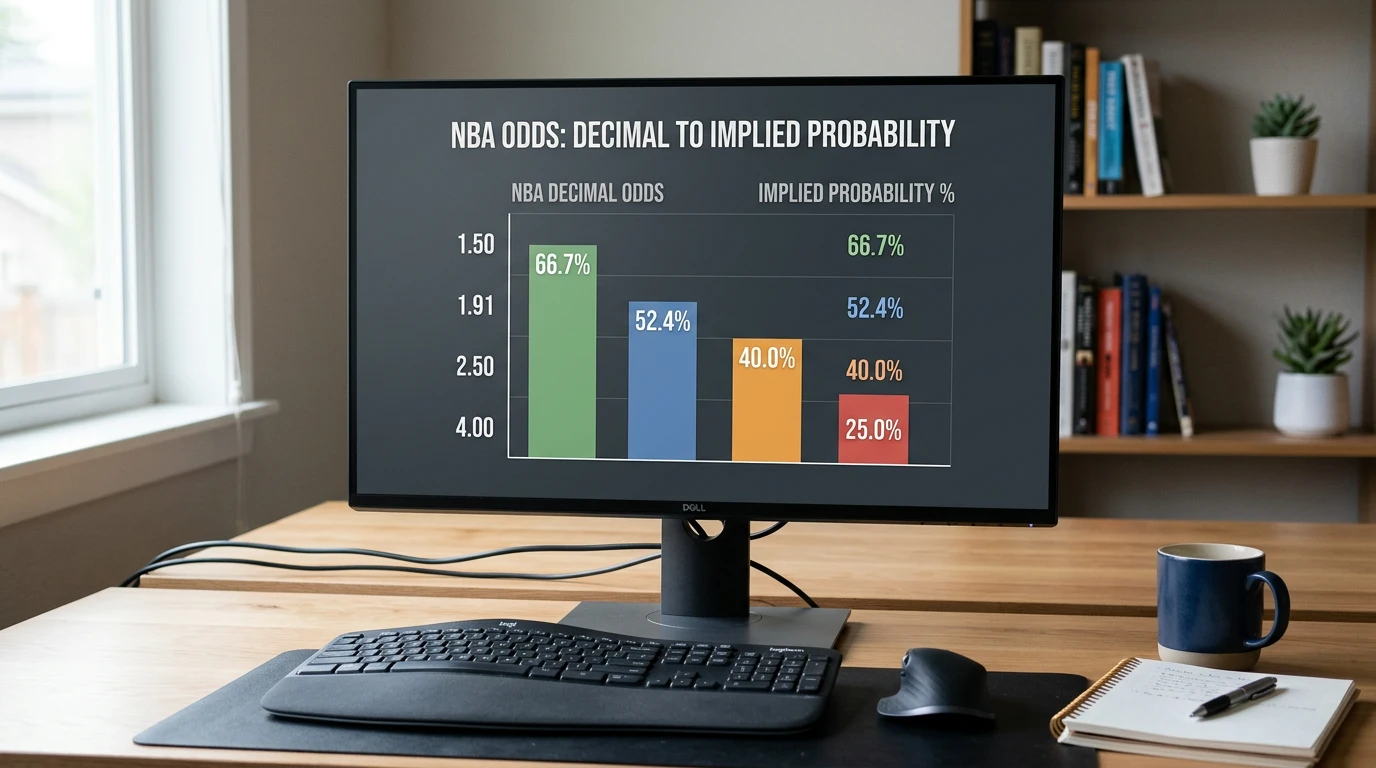
Reading the implied probability hidden in any of these prices is mechanical work – every futures price has a corresponding decimal, fractional and American display. The breakdown in how to read NBA odds across formats covers the conversion in practical terms.
Season Win Totals
Season win totals are the calmest futures market on the board. Each team gets a projected number of regular-season wins – usually a fraction like 47.5 or 38.5 – and you bet over or under. No playoff uncertainty, no MVP narrative, no superstar injury wiping out your ticket overnight. Just 82 games and a number.
The line is set with surprising precision. Books model each team’s roster turnover, schedule strength, coaching changes and projected health. The opening number is usually within two wins of the season’s actual outcome for most teams. Where it gets interesting is when there’s a structural change the model is slow to price – a coaching firing, a star trade, an unexpected schedule lighter than projected.
I treat season win totals as the futures market for punters who don’t enjoy waiting until June for a verdict. By March you usually know whether you’re cooked or cruising. Cash-out values move in line with the team’s actual wins, and most UK books offer mid-season cash-out on win-totals tickets – sometimes at a premium, sometimes at a discount, depending on which side they want to clear off the book.
Hedging a Futures Ticket
Hedging means placing a counter-bet to lock in a guaranteed profit or limit a guaranteed loss. The classic example: you backed Boston at 12.00 to win the title in October. They make the Finals against a 6.00 underdog. You can now back their opponent at 6.00 for £100 to guarantee yourself either a £1,200 profit if Boston wins, or a £600 profit if Boston loses. The maths becomes: stake £100 to lock in £600 minimum return.
The temptation to hedge earlier – say, at the conference finals stage – almost always costs you long-term value. The probabilities haven’t fully resolved yet, the price for the opposite side is still inflated, and you’re paying a heavy fee for emotional comfort. I hedge at the Finals stage if at all, and only if the bet size is meaningful relative to my season bankroll.
The other version of hedging is across-market hedging. Backing Boston at 12.00 in October and then betting their conference rival at 8.00 in February is not really hedging – it’s a portfolio adjustment. You’re paying market price for a position that’s already moved in your favour. That’s fine if you understand what you’re doing, but it’s not the lock-in safety net some punters imagine. Real hedging only works when probabilities have collapsed to near-binary outcomes, and that’s the conference final or the Finals themselves.
When do NBA championship odds become ‘live’ enough to bet?
The championship odds board reopens within a week of the previous season’s Finals ending and stays live through the playoffs of the following year. Early-season prices are noisy because the model has to project free agency, draft and roster turnover with limited data. The market sharpens around January, when teams have played 40-plus games and the trade deadline is approaching. From an edge standpoint, October prices on middle-tier contenders sometimes offer the best long-term value, but only if you can stomach holding a ticket for eight months.
Do UK books void futures if a team is dissolved?
Team dissolution in the NBA is exceedingly rare – the league has gone decades without it – but the standard UK terms typically void any futures ticket on a team that ceases to participate, with the stake refunded. The same applies to a player futures bet if the player retires mid-season due to injury. Read the bookmaker’s settlement rules before placing large futures stakes, because the wording on retirement and injury voids varies between operators.
Prepared by the how Does nba Betting Work editorial staff.