Match Totals and Run Lines: Over/Under Betting Strategies
 Available in US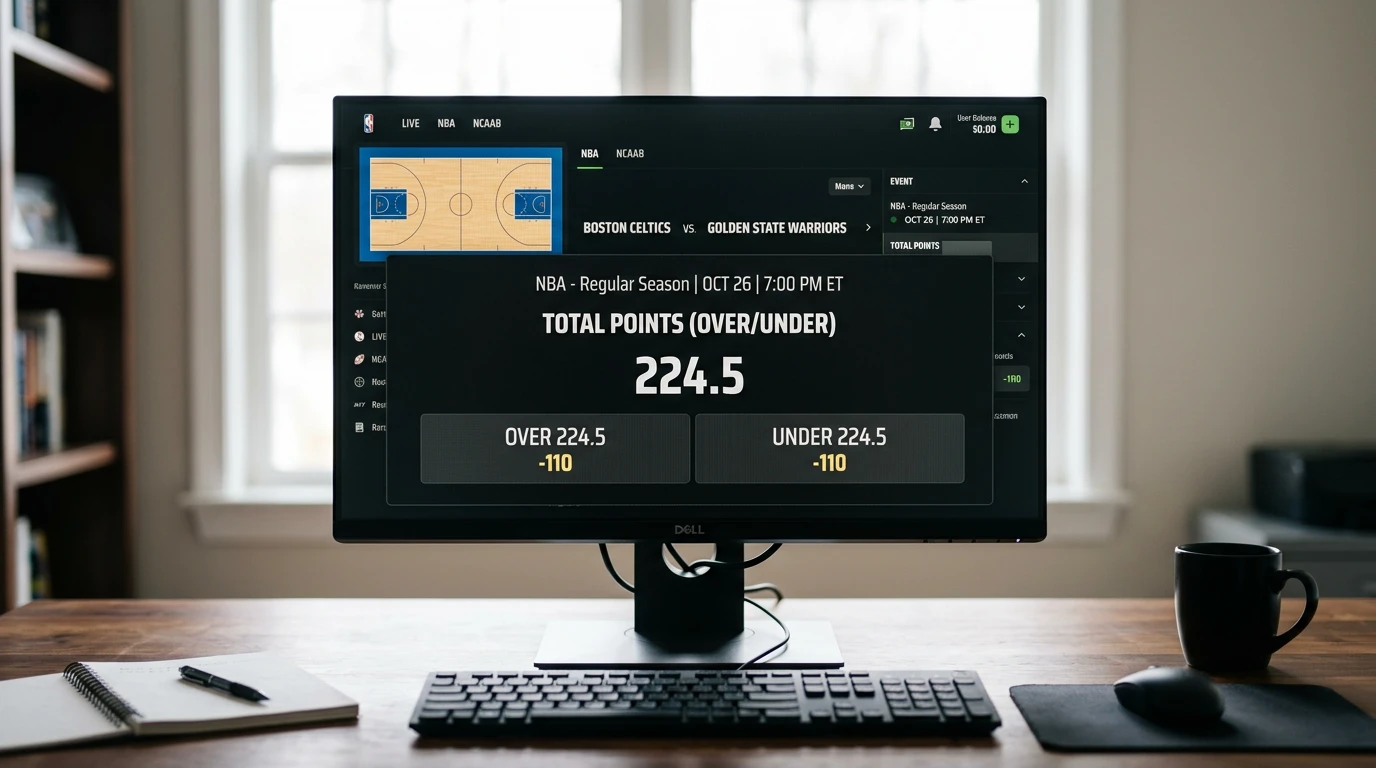
Evaluating Pace Metrics for NBA Totals
One of the cleanest bets I ever cashed was an under on a Tuesday-night game between two tanking teams in early March. The total was 232.5, both rosters were missing two starters apiece, and neither side wanted to play defence – they just couldn’t make a shot. Final score: 102-98. Two hundred points dead. The bet wasn’t clever. It was the market refusing to acknowledge that a sleepy game played by two B-teams produces sleepy points.
That’s the deal with totals. The number you see – 218.5, 224, 231.5 – compresses everything that matters about how a basketball game flows. Pace, three-point volume, defensive rating, foul rate, garbage time, even the referee crew. All of it lands on one line. Your job as a punter is to figure out which of those inputs the market got right and which it underweighted.
UK punters meet this market on every NBA slate, and the popularity is moving with the audience. The UK Gambling Commission’s chief executive Andrew Rhodes told regulators in early 2025 that operators were seeing a clear widening of sports beyond the traditional horseracing and football, with cricket, basketball and US-based sports growing in use. Totals are a big part of that growth – they’re easy to pick up, fun to watch in-play, and decoupled from picking a winner.
If you anticipate a fast-paced start but a slow finish, you might find better value exploring NBA first quarter and half betting markets instead of the full-game total.
How Totals Are Priced
The opening total is built from three layers: each team’s expected points scored against an average defence, an adjustment for the matchup’s pace, and a small wobble for variance like back-to-backs and altitude. Books project a points-per-100-possessions number for offence and defence on each side, multiply by the projected possession count, and round to the nearest half-point. That’s the skeleton.
The flesh is matchup-specific. Two top-five offences playing a game projected at 102 possessions might land at 232.5. Drop one of them into a defensive identity that hounds at the perimeter and the line drops to 226. The arithmetic is mechanical; the inputs are the part that takes years to read. With 13.5 million active accounts at the largest UK online operators reported in spring 2025, a sharp NBA total moves quickly when the right injury news lands.
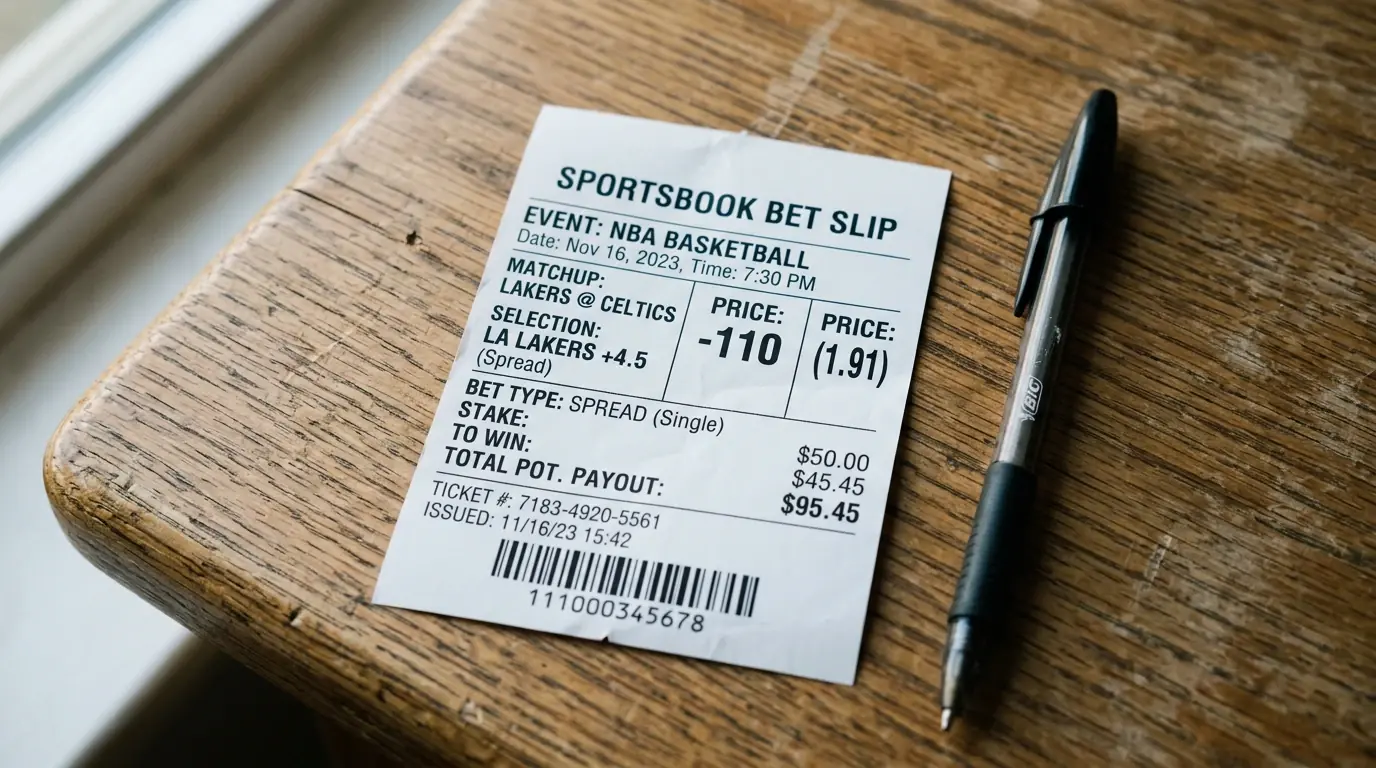
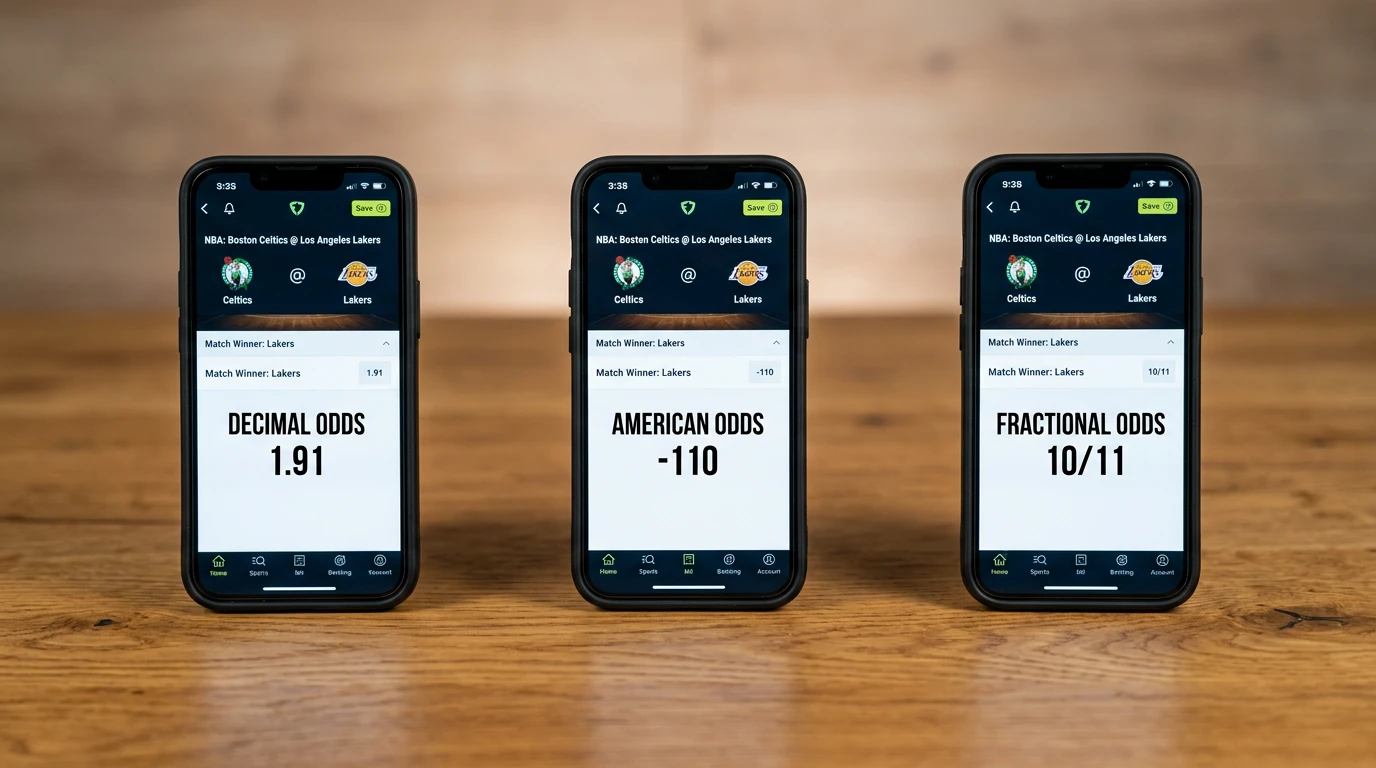
Pricing on each side is usually −110 in American or near 1.91 in decimal. That’s the standard juice. When you see one side at −115 and the other at −105, the book is telling you it has more action on one half of the market and is shading the price to attract the other half. Nine times out of ten, that’s the public chasing the over and the book sweetening the under. Knowing which side gets juiced more often is half the battle.
Pace and Offensive Rating Inputs
Pace is the most misunderstood word in basketball betting. It doesn’t mean “they play fast.” It means possessions per 48 minutes. A team with a high pace gives you and the opponent more chances to score. A team with a low pace doesn’t grind out wins by playing slow defence – they simply use more shot-clock per possession and produce fewer total possessions.
The mistake amateurs make is reading a high-scoring team and assuming the over plays. Some of the best offences in the league play slow on purpose – half-court teams that score a tonne per possession but don’t generate many possessions. Their games can sit comfortably under 220 even though both teams are top-ten in offensive rating. Conversely, two thirty-fifth-ranked offences in a high-pace shootout can crack 240 because the possessions are flying.
The split that earns the punter is identifying when both inputs align. Two top-fifteen offences plus two top-fifteen pace teams equals over candidate. Two stingy defences plus two slow paces equals under candidate. The cross-matchups – fast offence vs slow defence – are the tossups, and that’s where the books are sharpest.
The Public’s Over Bias
Cheering for the under is psychologically miserable. You watch every made basket like it’s a personal attack. You suddenly love defensive stops. Your friends, who picked the over, are loud. You are quiet. This emotional asymmetry is the foundation of one of the longest-standing biases in NBA betting.
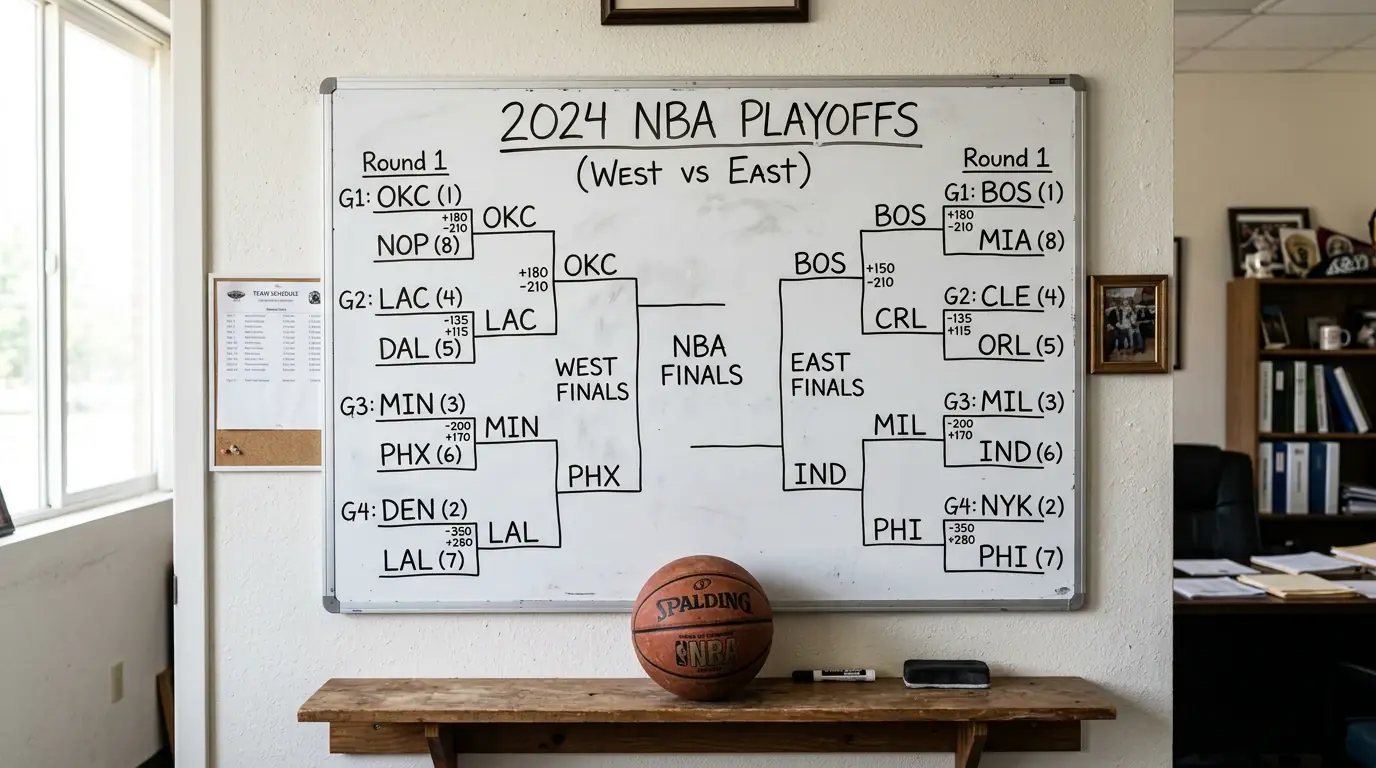
The numbers back up the feeling. In the 2025-26 first round between Philadelphia and New York, Game 2’s total of 215.5 attracted over 95% of the public handle on the over. The market price barely moved because sharp money quietly took the under at the same time, soaking up the public liquidity. The game finished under. That’s not a unique story – it’s the rule, especially in the playoffs, when defensive intensity ramps up and rotations shorten.
I’d argue the under is the closest thing to a structural edge in NBA totals, but it’s nowhere near a guarantee. What it gives you is a starting bias to investigate, not a default position to act on. The public’s love affair with the over means the under often has slightly cleaner lines, especially on prime-time televised games. For a sharper read on the quarter and half markets that derive from these full-game totals, look at how NBA quarter and half betting handles the overtime exclusion.
Arena, Schedule and Travel Effects
Indoor sport. No weather. The NBA never gets a rainy day. So why list arena effects at all? Because altitude, court conditions, and travel time still nudge totals.
Check out today’s most valuable predictions and market analysis on the leading NBA betting resource in the UK.
Denver sits at over 5,000 feet, and visiting teams are visibly winded by the third quarter. The implication for totals is mixed: tired legs lead to worse shooting, but also lead to less defensive resistance, so the net effect on Denver home games is small but real. Books bake this in without much fanfare. Spotting the days when they don’t is rare and worth it.
Schedule-wise, the second night of a back-to-back drops a team’s offensive output by something like two to three points on average. Add a flight and you’re looking at a four-point hit. When both teams are on the second night of a back-to-back, the total drops by four to six points off the model line. When neither is, the line tilts up. UK books factor this in well, but the late-fold games – the ones added to the slate after a postponement – sometimes get sloppy pricing because the trader has less time to refine the model.
Why does the under tend to win more in NBA playoffs?
Playoff basketball tightens defence, shortens rotations and slows pace. Coaches lean on their best six or seven players, isolation possessions become the half-court default, and offensive efficiency drops noticeably across rounds. Totals are usually set lower than regular-season counterparts to reflect this, but the public still loves the over, so the slight edge on unders persists. The over still wins plenty, just less often than the public expects.
What is ‘team total’ vs ‘game total’?
A game total is the combined points scored by both teams across regulation and overtime. A team total is the points scored by one specific team. So a Boston team total of 112.5 means you’re betting only on Boston’s score, regardless of how Detroit performs. Team totals are useful when you’re confident about pace and one team’s offensive form but unsure about the other side, and most UK books offer them with juice similar to the main game total.
Published by the how Does nba Betting Work team.