Match-Winner Odds: Analyzing NBA Moneyline Markets
 Available in US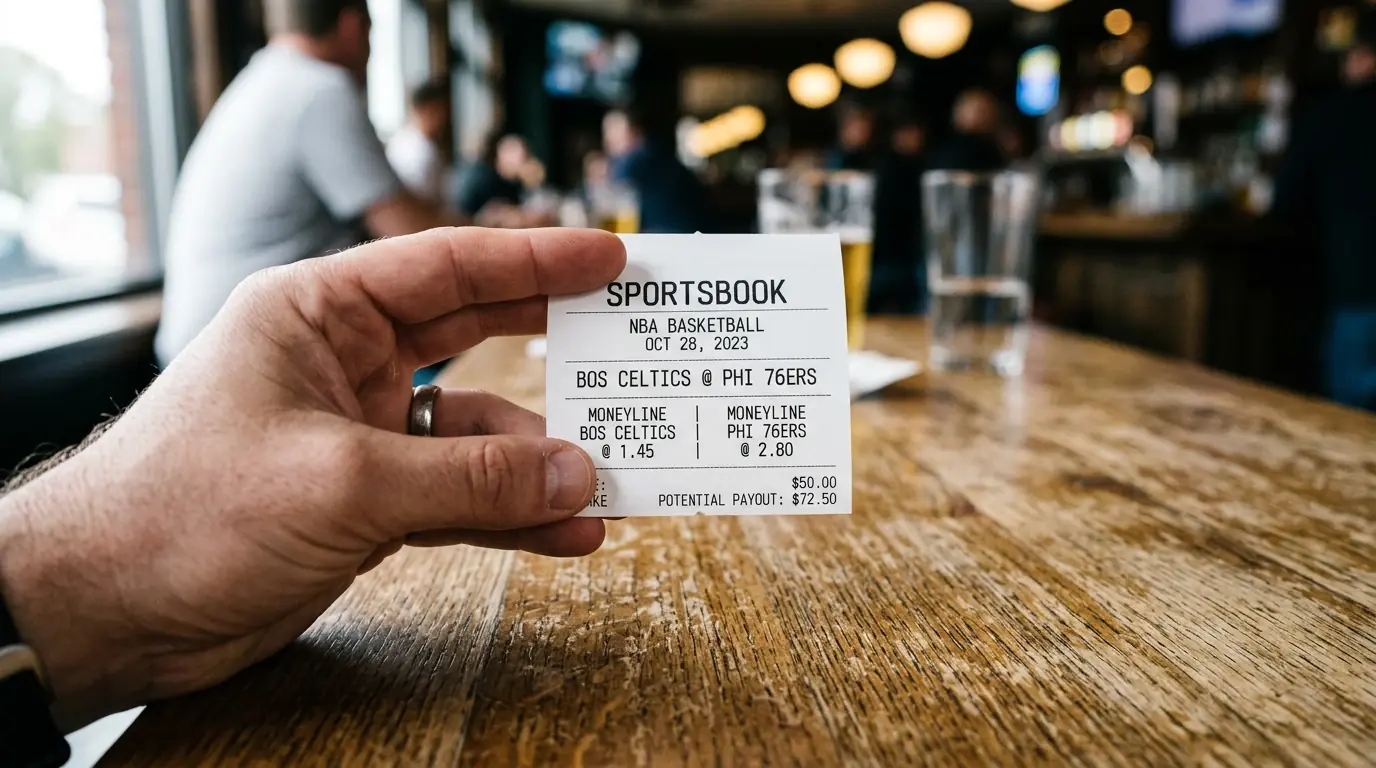
Moneyline Betting Mechanics and Hidden Bookmaker Fees
The first NBA ticket I ever wrote was a moneyline. I was twenty-three, the Lakers were a short favourite at home, and I had no idea I was paying a tax on the word “favourite” itself. I lost. I lost again the next night for the same reason. The mistake wasn’t the team I picked. The mistake was assuming a moneyline was a fair fifty-fifty bet on a winner.
Here’s the truth I wish someone had handed me back then. A moneyline asks one question – who wins the game, including overtime – and the bookmaker prices that question with a built-in margin. Pick the favourite and you risk more than you stand to win. Pick the underdog and you win more than you risk, but you’re betting on something the market thinks is less likely. Neither side is “free money.”
UK punters meet this market every night the NBA tips off, and basketball is the second-most popular betting sport in the United States – about 32% of all US legal handle goes through hoops. That liquidity flows into UK price feeds too, which means moneyline numbers are tight and competitive. Tight pricing is good for honest punters. It also means rookie mistakes – backing every short favourite, parlaying chalk, ignoring rest days – punish you faster than they would on a softer market.
How a Moneyline Is Priced
Picture two punters at a pub. One thinks Boston wins tonight, the other backs Detroit. They each put £10 in the middle and the winner takes £20. That’s a true 50/50 market. Now picture a bookmaker offering the same bet. Suddenly Boston pays out £18.18 on a £10 stake instead of £20, and Detroit pays out £25 instead of £20. The missing money – that’s how the book stays in business.
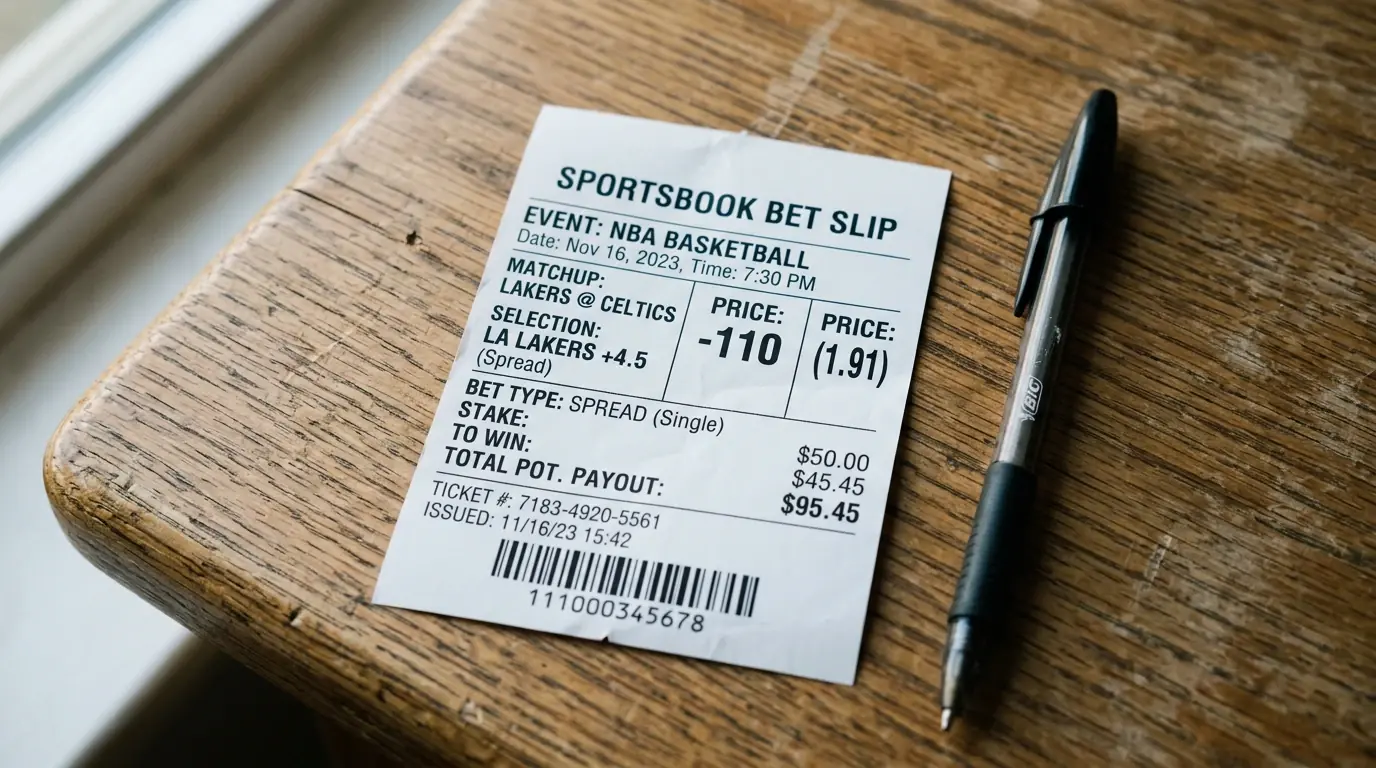
The American display you’ll see on most US-facing screens is the cleanest way to read it. A line of −180 means you risk £180 to win £100 in profit. A line of +220 means you risk £100 to win £220 in profit. UK books default to decimal, so −180 becomes 1.56 and +220 becomes 3.20. Same prices, different presentation.
Where does the bookmaker’s edge sit inside those numbers? Convert each side to an implied probability and add them together. A typical NBA moneyline of −180 and +160 implies roughly 64.3% plus 38.5% – a total of about 102.8%. That extra 2.8% above 100 is the hold, often called the vig or juice. It’s the price you pay for the convenience of a settled, instant market. On a heavy favourite like −400, the vig hides inside an even shorter price, which is one reason short prices feel so unforgiving when they lose.
Not every game is priced this aggressively. With $147.9 billion bet legally on US sport in 2024, basketball moneylines see enough volume that books can afford to trim the margin on marquee matchups while widening it on early-season Tuesdays. If you’re scanning two UK books and one shows −175 while the other shows −180, that’s not noise. That’s a real price difference, and over a season it adds up.
Favourites, Underdogs and Pick’em Games
The first time I saw a “pick’em” on an NBA slate I assumed it was a glitch. Both teams at +100, identical decimal of 2.00 each side, no minus, no plus. It happens roughly two or three times a fortnight in the regular season – usually two evenly matched conference rivals on neutral rest. When you see it, the book is telling you the market gives neither side a clean edge.
A favourite is anything priced at minus money in American odds, or below 2.00 in decimal. The shorter the price, the deeper the chalk. I treat anything past −300 as the danger zone for a single moneyline. Yes, a 75% implied chance still feels comfortable. But the maths bites: you need to win three of those bets in a row just to clear the risk on the first one, and one bad night sends you back to flat.
Underdogs are the inverse. A dog at +180 wins about 35.7% of the time before the vig. Stack two of those into an old-school double and you’re rooting for a 12.7% outcome. That’s why parlaying NBA dogs feels glamorous and drains bankrolls so quickly. The maths doesn’t care that the games look winnable individually.
Decimal vs American Display
Most UK punters never see American odds. The default at every UKGC-licensed sportsbook is decimal, and the conversion is mechanical. Decimal multiplied by stake equals total return, including the original stake. So 1.56 × £10 = £15.60 back, of which £5.60 is profit. Compare that to American −180, where you risk £180 to win £100, and the implied probability is identical.
The shortcut I keep in my head: decimal under 2.00 is a favourite, decimal above 2.00 is an underdog, decimal of exactly 2.00 is a coinflip. Anything tickling 1.10 is a near-lock by the market’s read, and anything north of 5.00 is a serious outsider. For UK punters who’ve grown up on football and cricket, decimal feels native because the stake is included in the return – no mental gymnastics required.
Where it gets messy is when a US-facing podcast quotes American numbers and your UK book shows decimal. That happens often during NBA podcast season. Build the conversion table once, save it on your phone, and stop guessing.
When Moneyline Beats the Spread
I’ll say something that will annoy spread purists. There are nights when the moneyline is the smarter ticket, even on a favourite. Think of a tightly contested back-to-back where you fancy the rested side to grind out a four-point win. The spread might sit at −5.5, asking you to pay for a margin you don’t believe in. The moneyline at −210 simply asks: do they win? Sometimes that’s the cleaner question.
The reverse is also true. If you back an underdog who you think will keep the game inside ten points but probably loses, the spread becomes the sharper play. Backing the moneyline outright on that dog throws away the cushion the spread gives you. The decision tree comes down to one honest question – am I picking the winner, or am I picking the margin?
One last note for UK punters. If you’re new to NBA, start with single moneylines on games you’d happily watch anyway. Skip parlays for the first month. Track every ticket. After thirty bets you’ll spot which mistakes are yours and which are the market’s, and you’ll know whether to lean into spreads as your reading sharpens. For more on how the spread market actually prices that point margin, the breakdown in how NBA point spreads work for UK bettors is the next stop.
How big a favourite is ‘too big’ on the NBA moneyline?
In my own bankroll discipline, anything past −300 stops being a single-bet candidate. The implied probability is high but the risk-reward asymmetry punishes one bad night badly. Books know this, and the vig embedded in heavy chalk rarely gives you back enough to justify the exposure on a single ticket.
Can you parlay only NBA moneylines together?
Yes, every UK book lets you build an NBA-only moneyline parlay. The catch is the maths. Two short favourites at −180 each combine into a price near +210, but the joint probability is roughly 41%, so over a season the parlay route bleeds value compared with placing the two singles separately. Use parlays for entertainment, not for grinding edge.
Written by the editors at how Does nba Betting Work.