Line Shopping for NBA Bets: Why UK Books Don’t Always Match
 Available in US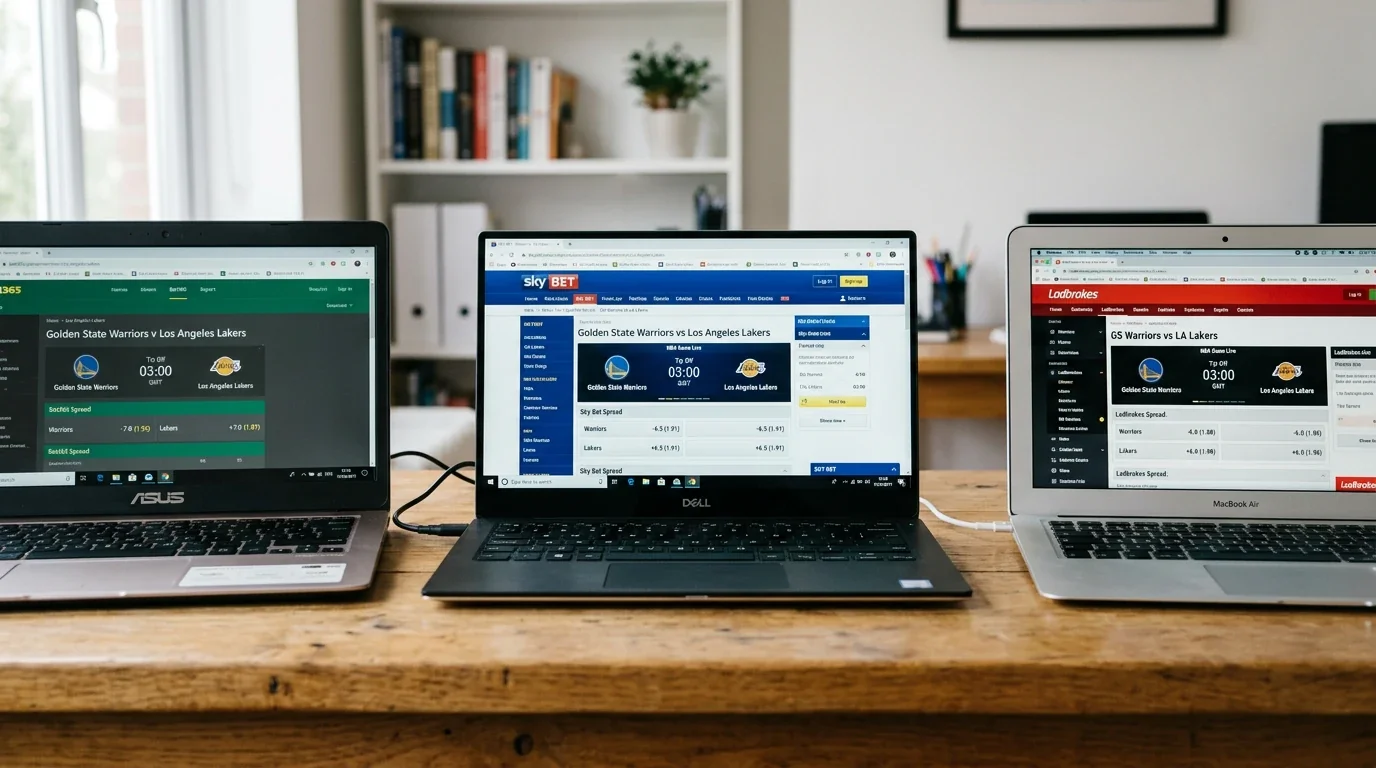
The Edge Hidden in Half-Points
Three tabs open. Same NBA game. Three different prices. Boston −7 at 1.95 on tab one. Boston −6.5 at 1.91 on tab two. Boston −7.5 at 1.85 on tab three. To a casual punter, those look like noise. To anyone who’s spent time line-shopping NBA bets across UK books, they look like three meaningfully different bets – and choosing the right one is worth the difference between a winning season and a break-even one.
The UK Gambling Commission’s chief executive Andrew Rhodes summarised the scale of the market in early 2025: “Recent data published shows that total gross gambling yield is at its highest ever level at £15.6 billion. Participation in gambling has remained stable at 48%, just under half of the adult population in Great Britain.” Half the country bets, and the market for NBA action is growing inside that pool. Yet most UK punters stick to one book, accept whatever price they see, and never realise how much edge they’re leaving on the table by not comparing.
UK Q1 2025 online GGY hit £1.45 billion, up 7% year-on-year, distributed across thousands of operators with 5,825 licensed retail betting offices still active. The market is fragmented, which means prices vary, which means line-shopping pays.
Why UK Books Hang Different NBA Lines
Three reasons books disagree on NBA prices. First, different traders use different power ratings. The fundamental input – how good is each team? – is a model output, and every book has slightly different inputs feeding their model. The opening line at book A might be Boston −6.5 because their model rates Boston a half-point higher than book B’s model.
Second, different books have different exposure profiles. If book A has taken heavy action on the underdog, their next pricing decision will lean toward shading the favourite to attract balancing money. Book B, with action distributed evenly, doesn’t need to shade. So book A might post Boston −7 at 1.85 (slightly worse for backers) while book B posts Boston −7 at 1.91. Same spread, different juice.
Third, books update at different speeds. Sharp money moving the line at one operator gets reflected within minutes; at smaller books, the delay can stretch to half an hour. During that delay, the prices visibly diverge. NBA injury news between 60 and 90 minutes before tip-off is the most common cause – a star ruled out can shift the spread by four points or more, and not every UK book reacts at the same speed.
What this means for a UK punter: scanning two or three books before placing any meaningful NBA stake is a habit that pays for itself within a week. The few minutes of effort produces a real edge, and that edge compounds across hundreds of bets a season.
Where the Biggest Edges Live
Not all NBA markets have the same line-shopping potential. The marquee primetime games – Lakers, Celtics, Warriors, Knicks – are sharpened by enormous betting volume, and prices across UK books cluster within a half-point of each other most of the time. The edge there is small but real.
The bigger edges hide in the smaller games. A Wednesday-night Memphis-Sacramento game gets less attention from sharp money, less attention from books’ senior traders, and less attention from the punters who keep prices honest. Two-point spread differences across books are common. Sometimes you’ll find half-point differences on the total. These soft pockets are where line shopping produces the cleanest gains.
Player props are the wildest territory. UK books carry NBA props at very different prices, sometimes with 1-2 point gaps on the same player on the same night. A LeBron points prop might be over 25.5 at 1.85 on book A and over 24.5 at 1.91 on book B. The mathematical comparison favours book B comfortably, even though the headline number looks worse – the lower line at better juice produces a higher expected return on most reasonable probability estimates.
The other place edges live is on alternate lines. If you fancy a heavier favourite, the alternate spread of −10 instead of the main −7 shows huge price variation across books. Book A might offer Boston −10 at 2.40, book B at 2.60, book C at 2.80. The 2.80 is a 17% better return on the same outcome. Line shopping on alternates is the sharpest tool in the UK NBA punter’s box.
Multi-Accounting Within UK Rules
Holding accounts at multiple UK bookmakers is legal, common and sensible. Most UK punters who line-shop NBA bets carry two to four active accounts, switching between them based on which one has the best price for any given ticket. The UKGC framework imposes no cap on the number of accounts a single bettor can hold across different operators.
What the rules do require is honest KYC at each book. You verify your identity once per operator, link a payment method, set up your deposit limits, and you’re good to bet. The same name, the same address, the same bank account works across all UK books. There’s no rule against having Sky Bet, William Hill, Bet365 and Betfair active simultaneously.
The friction is on the operator side. If a book identifies you as a sharp punter – typically because your CLV is consistently positive or because your bet patterns suggest professional inputs – they may limit your stakes or close your account. This isn’t illegal on the book’s side; it’s standard commercial practice across the industry. Sharp punters quietly maintain a wider rotation of accounts to spread their action and reduce the risk of any one book limiting them. With 22.5 million UK adults betting in some form each month, the volume across the market is enormous, and most recreational punters never trip the limiting threshold.
The practical workflow: open three or four accounts at the major UK books with strong NBA coverage. Check prices at each before staking. Bet wherever the price is best. Spread your action so no single book sees disproportionately heavy stakes from you. The detailed framework around UKGC rules – deposit limits, FVC checks, KYC – is broken down in the UK regulation guide for NBA bettors.
Tools and a Repeatable Process
The tooling you need for line shopping is minimal. A browser with three or four UK book tabs open, an account at each, and ideally a free odds-comparison aggregator that displays NBA lines across operators in one view. Several aggregators serve the UK market – most are free, ad-supported and reasonably accurate, though slightly delayed compared to going to the books directly.
The repeatable process is short. Step one: build your shortlist of NBA bets you want to make for tonight, based on your own analysis. Step two: check each shortlisted bet across your two to four books, noting the best price. Step three: place each bet at the best-priced book. Step four: log the bet, the price you got, and which book offered it.
The discipline that matters is bet selection first, line shopping second. If your selection process is bad – you’re picking sides without proper analysis – line shopping won’t save you. It just means you’re getting the best price on a losing strategy. But if your selection is sound, the difference between betting at the best price and the median price across UK books typically adds 2-4% to your long-run return. Over 200 bets a season at £20 stake, that’s £80-£160 in pure edge that requires no additional handicapping skill – only a few minutes of comparison per bet.
How many UK NBA books do I realistically need?
Two minimum, four is the sweet spot, more than six is overkill. With two books you’ll catch most of the price variance on standard NBA spreads and totals. Adding a third and fourth catches the soft pockets on smaller games and alternate lines. Beyond four, the marginal edge gets thinner – you’re spending more time managing accounts than improving prices. The exception is if you specialise in NBA props, where a wider rotation of five or six books pays off because prop prices vary more than core market prices.
Is line shopping worth it under £20-stake bets?
Yes, but the value compounds rather than appearing on any single ticket. Line shopping on a £10 bet might gain you 30 pence on a single NBA spread compared to the median price. That’s not life-changing on one bet, but across 200 bets a season at the same average gain, you’re picking up £60 in pure edge that took perhaps two minutes per bet to capture. For UK punters who already do their own selection work, line shopping is the highest hourly-rate activity in the betting workflow – the gain per minute spent is significantly higher than the gain from additional handicapping.
Created by the ”how Does nba Betting Work” editorial team.